
MIST was tested in the Thermal VACuum test facility ( TVAC ) – affectionally called the “Space Sauna” at the Physics department at KTH’s AlbaNova sub-campus.
The purpose of this test was to verify that all elements of the satellite function properly in vacuum at the maximum and minimum operating temperatures of each unit. The satellite was placed inside a space simulation tank normally called a Thermal Vacuum tank (TVAC). The satellite was fed power from outside (unless the TVAC has an “artificial sun”). The temperature of walls of the tank is varied from very low to very high over several cycles. The satellite has black-anodized dummy solar panels to facilitate the satellite being in thermal equilibrium with the tank walls.
The satellite was controlled via an “umbilical” cable. (Using a radio link is also possible but very hard to implement for this test because the satellite’s antennas were not deployed). Correct functioning of all units was determined by monitoring telemetry from these units. All modes of operation may be hard to check, but the basic functioning at the extreme operating temperatures were checked. Some units, such as the flight battery, may be equipped with heaters to protect the unit from very low temperatures that the satellite may be subjected to. These heaters are normally controlled by the power system electronics. Correct functioning of these heaters was verified during this test.
The test started in earnest on August 5. The test facility was staffed by students or recently graduated students around the clock. There were three 8-hour shifts per day. In each shift one person operated the TVAC, one person operated the satellite, and one person logged events/actions and kept notes. A total of 16 persons worked in shifts. There was also a three-person team on-call crew to support on-board software matters.
The test ended in the afternoon of August 9. The satellite was back at the MIST lab late in the evening that day.
The results of the test are very positive and in general MIST passed the test successfully. Minor discrepancies were discovered but most of them were handled by the satellite operator in real time. Some onboard software modifications may be necessary after detailed scrutiny.
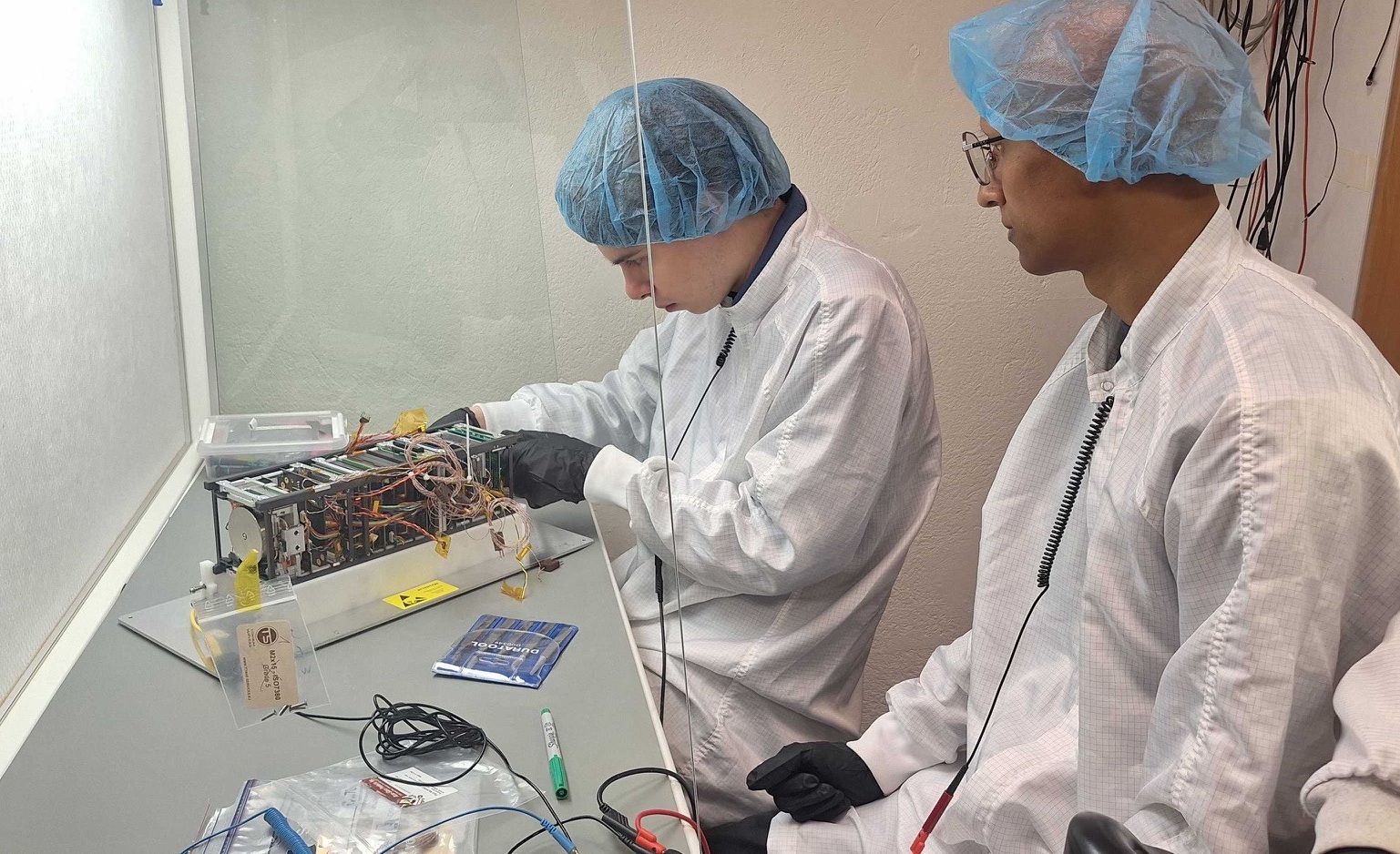
Above: Wiktor (left) and Nusayr prepare the satellite for the test on 4 August before transporting it from the MIST integration lab to the TVAC.

Above: Satellite (in its box) and ground support equipment waiting for an early morning transport to the TVAC facility at Albanova.
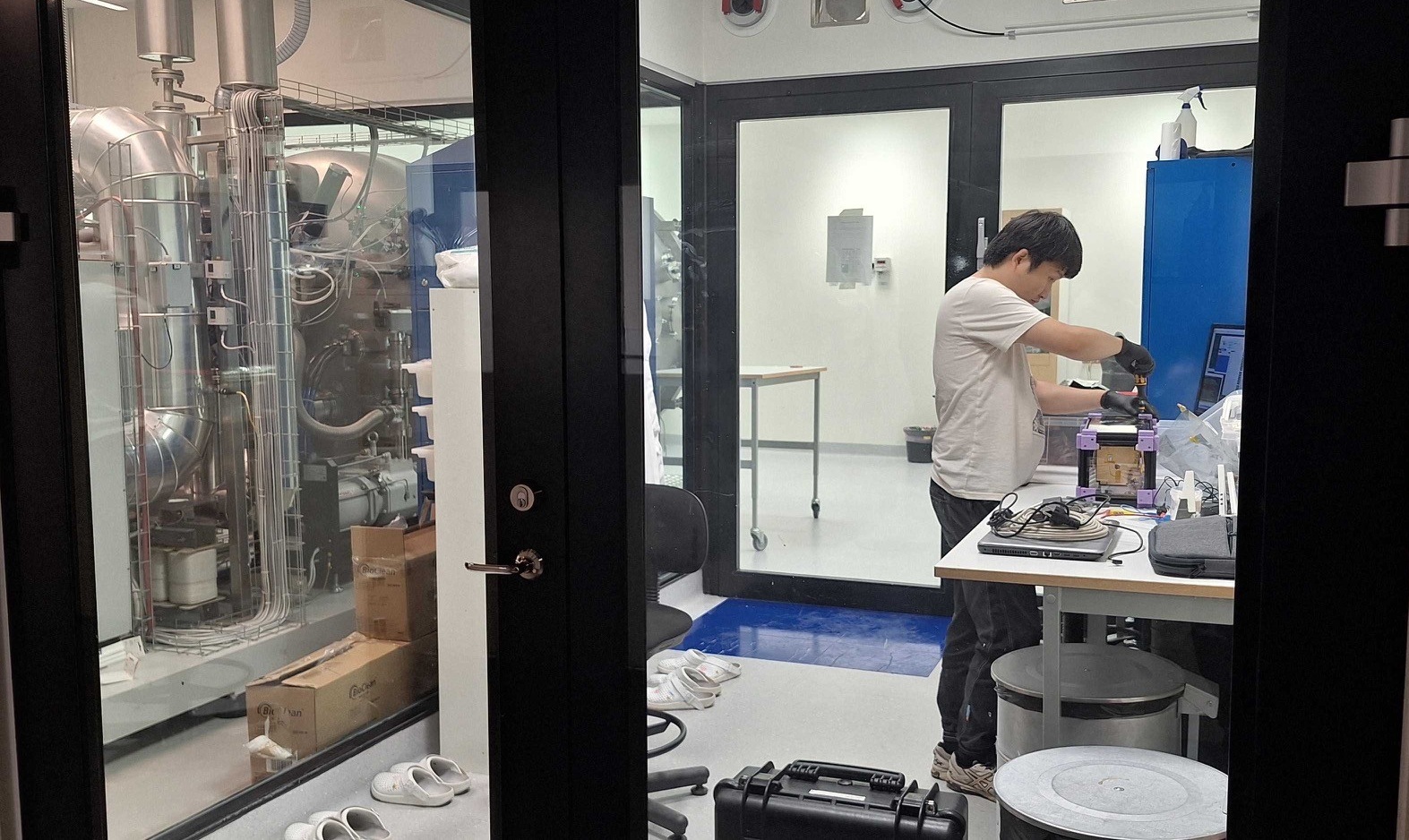
Above: Bo preparing to remove the satellite from its transport box in the TVAC airlock room.
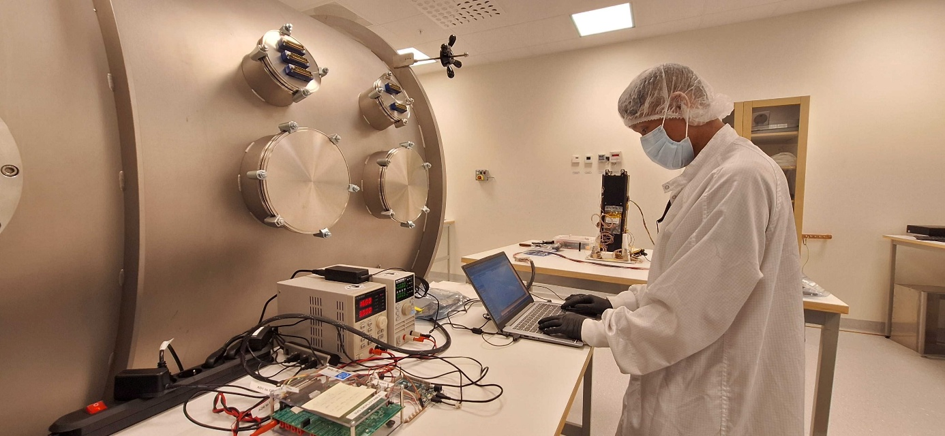
Above: The satellite is temporarily on the table in the background. Communications with the satellite was performed via an umbilical routed via one of the connectors on the tank wall (see below).
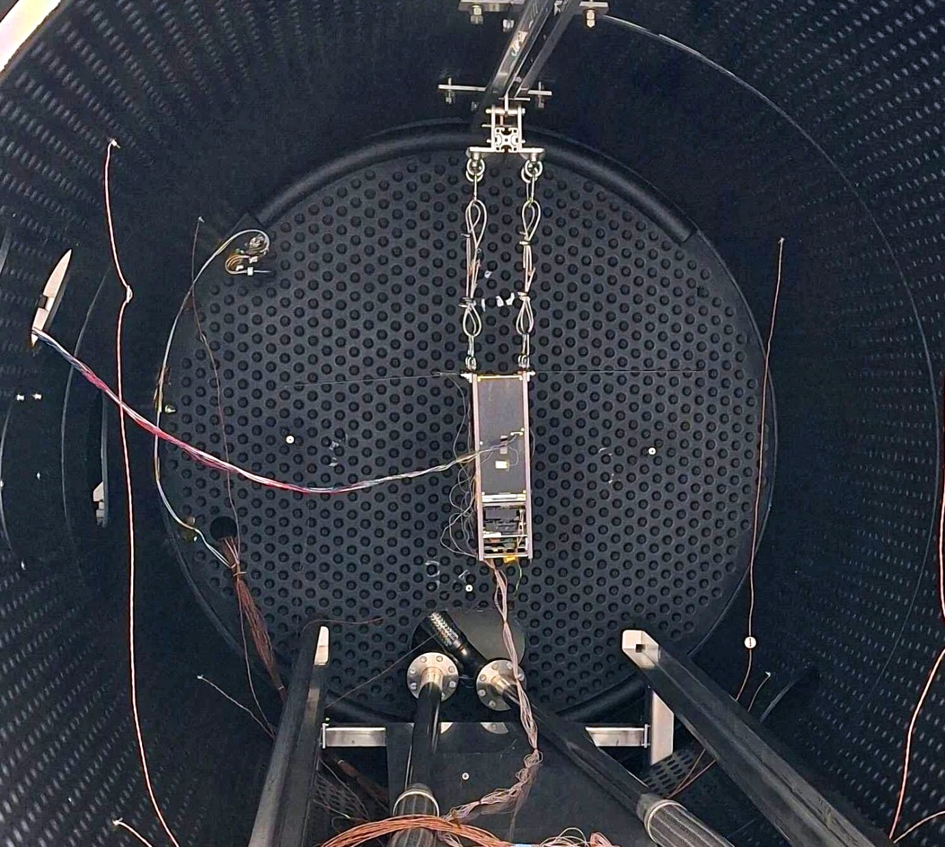
Above: In this picture the satellite is suspended from the ceiling of the TVAC. The multi-coloured cable from the satellite’s left side and the tank wall is the umbilical cable for communicating with the satellite and supplying it with power. The cables hanging below the satellite are thermocouple wires.
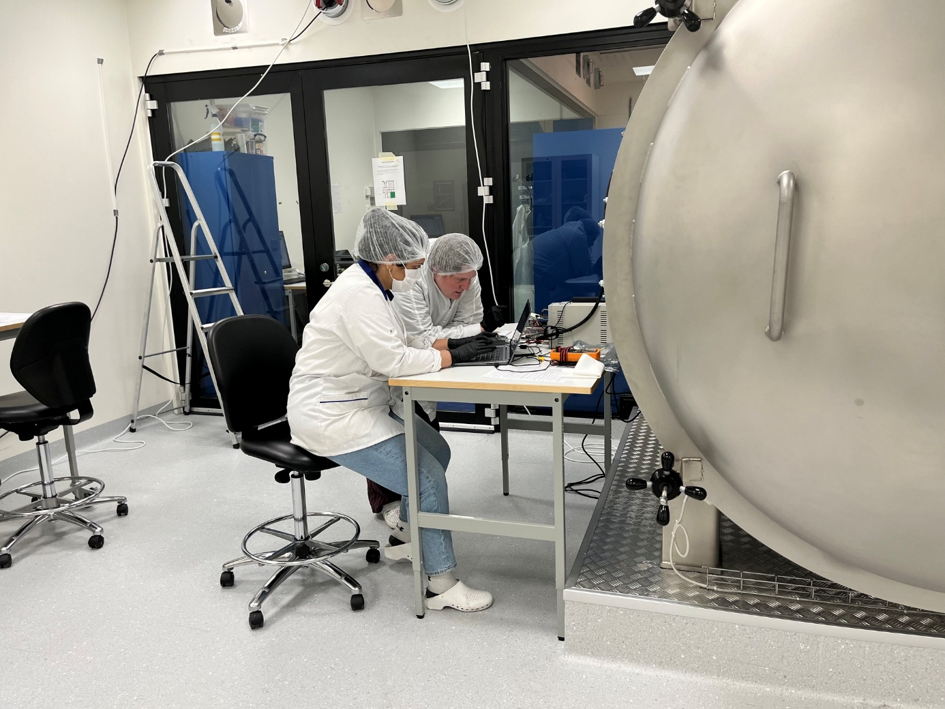
Above: Risha (left) and Marty controlling the satellite from a workstation in the clean room area of the TVAC facility.

