
This test was carried out at KTH’s premises at Teknikringen 29-33.
The purpose of this test is to check the correct initiation of the satellite following separation from the launch vehicle and initialization and commissioning of basic satellite functions:
- The test started with the kill-switch being triggered.
- Thirty minutes later the onboard software sent signals to trigger the deployment of solar panels and the deployment of the antennas of the satellite. The antennas were successfully deployed.
- The satellite was placed in wiew of the actual ground station of MIST and telemetry was successfully received from MIST and commands transmitted to it from the actual ground station.
The test was carried out with the satellite partly assembled in three parts placed near the window of a room across the inner yard of the KTH building complex where the MIST project is located. In this way the satellite was within view of the ground station.
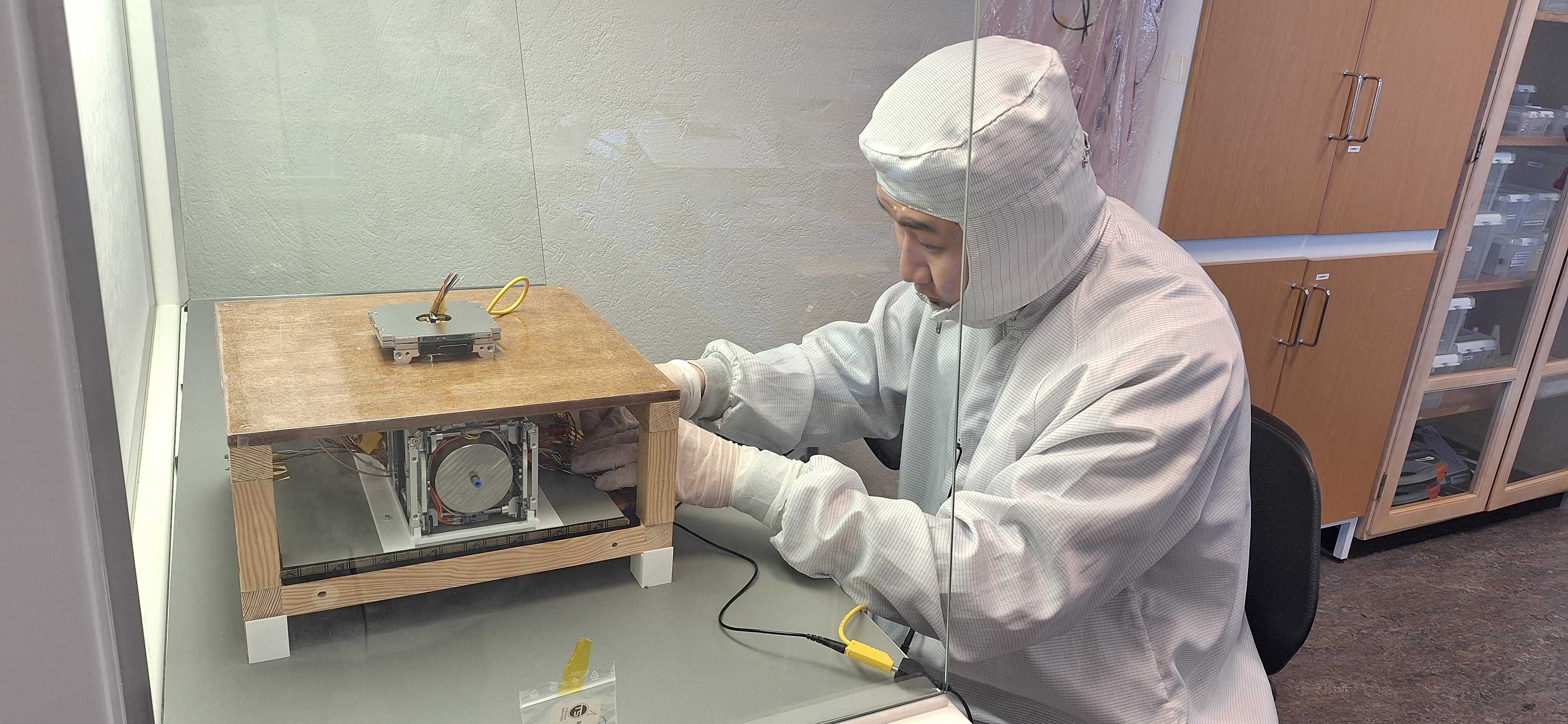
The picture above shows the satellite mounted in three parts in a special device for the communications/deployment test. The antenna system and the solar panel deployment mechanisms are placed on top of thus device. MIST team member Risha Haq is seen preparing this test setup.
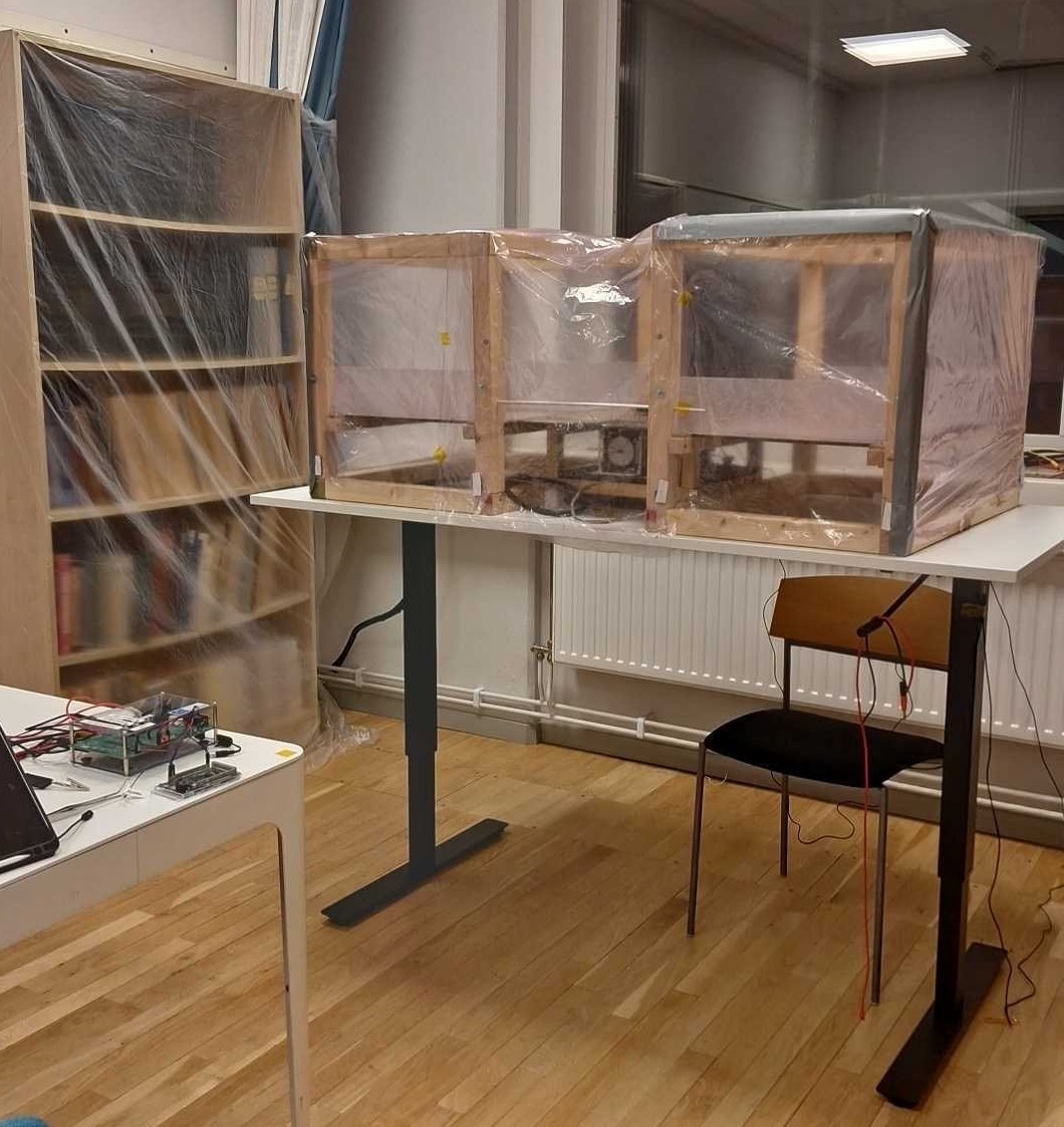
The picture above shows the satellite in the central low box. The two bigger translucent boxes on each side of the “satellite box” serve the purpose of “catching” and protecting the satellite antennas once they are deployed. The MIST ground station can be seen through the window behind the satellite box.
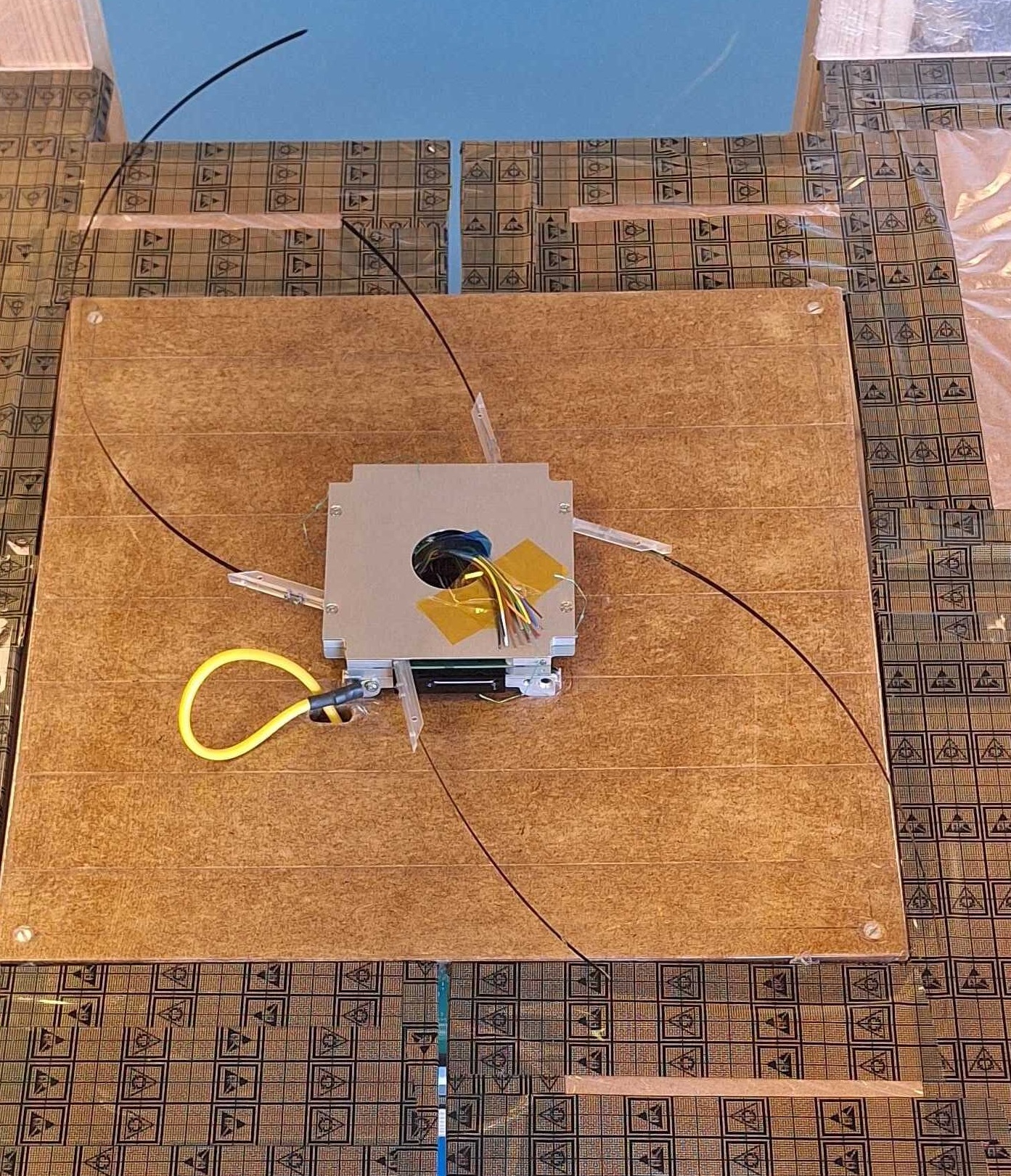
The picture below shows the transmit (short) and receive (long) antennas after successful deployment. The long storage of the antenna system after delivery from the manufacturer has caused to the antenna elements to be curved. This is not expected to have any major, long-term, effect on the antenna pattern and can also be expected to decrease as the antenna elements are thermally cycled in orbit.
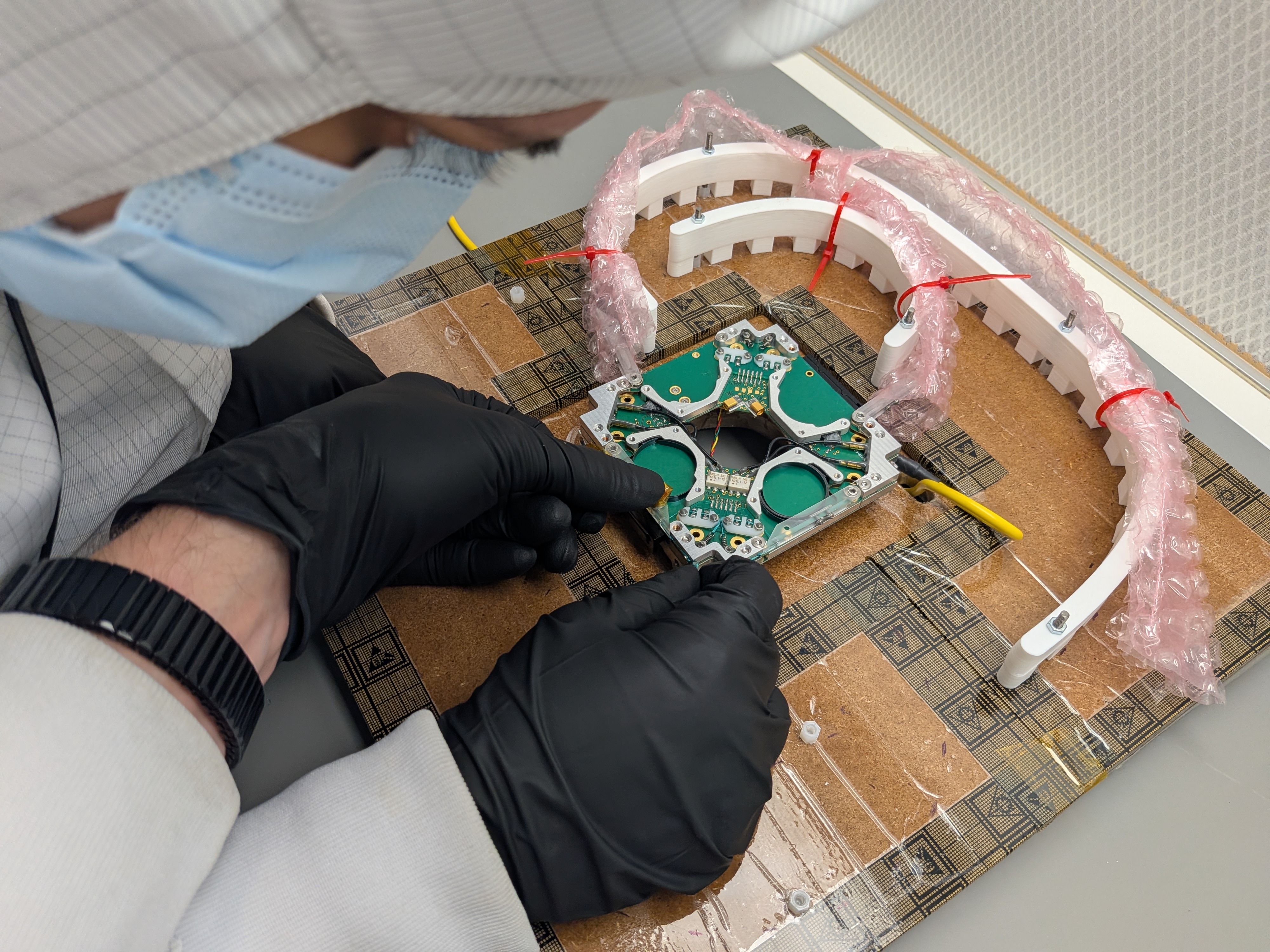
In Julu 2026, the antenna system deployment functions were restored by a refurbishment effort. This was carried out by using replacement “burn-wires” supplied by the manufacturer ISISPACE and the work was carried about by Risha Haq (in the the picture below) in the student team assisted by Erik Hedenström, a former MIST team member.
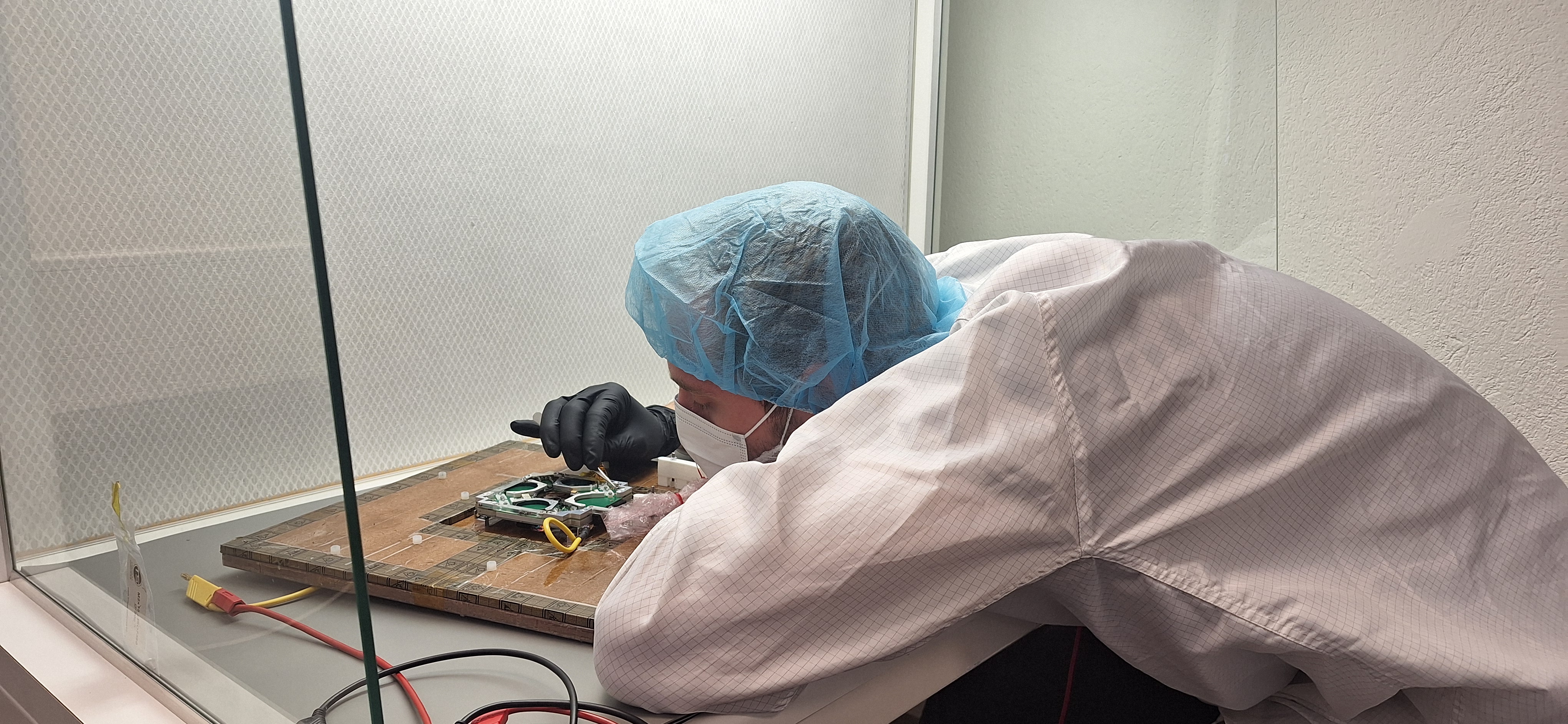
In the picture below the receive antenna has been refurbished while the transmit antenna elements are still to be rolled up for deployment in orbit.
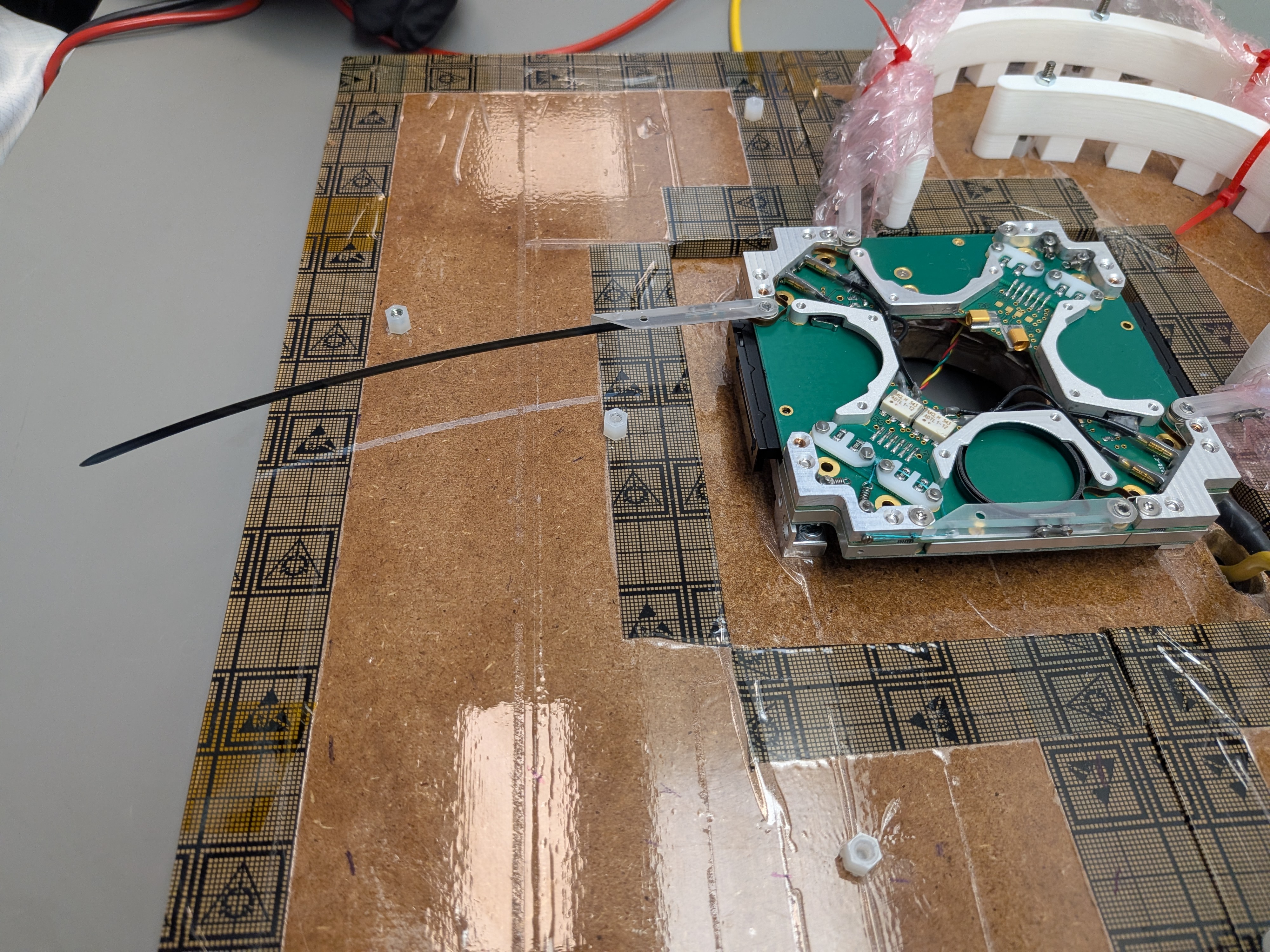
A special jig was used to perform the refurbishment of the antennas (see below)
There were several anomalies noted during the preparations for the test and the actual test. These anomalies have been addressed and corrective actions have subsequently been found, implemented and checked.

